Learn Esperanto online
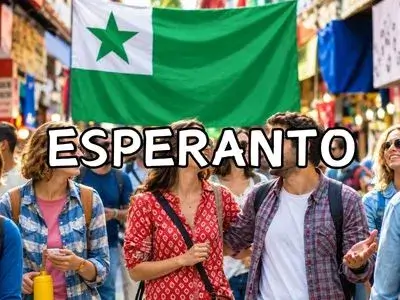
Esperanto is a planned language, created by L. L. Zamenhof and presented to the world in 1887, with the aim of being an international auxiliary language, easy to learn and neutral among peoples.
For Portuguese speakers
The grammar is extremely regular: no exceptions in verbs, no grammatical gender and fixed endings that indicate the function of words (nouns in -o, adjectives in -a, adverbs in -e). Portuguese speakers recognize a good part of the vocabulary, which has Latin roots.
- Endings that show a word's function
- Affixes that form new words
- Grammar without exceptions, ideal for beginners
What you study in Esperanto
- Grammar with 57 points explained, with examples, exercises and videos.
- Vocabulary organized by topic and dialogues from real situations.
- Conversation units in a learning path.
- Verb conjugation in the main tenses.
- Flashcards and games to help you memorize.
- Live TV and radio in the language, to train your listening.
- Certificate of completion.
Esperanto grammar topics
These are the topics you will find in Linguarudo's Esperanto grammar:
Introdução
- Introdução
Entrada
- História da Língua
- Alfabeto - A,B,C,D,E
- Pronúncia - ĉ, ĝ, ĵ, ŝ, ŭ
Artigo
- Artigos Indefinidos - não existe
- Artigos Definidos - la
Substantivo
- Masculino e Feminino - kelnero, kelnerino
- Nomes Abstratos - Amo, Espero, Libero, Amikeco
- Coletivos - Arbaro, Birdaro, Hundaro, Libraro
- Compostos - librovendejo, multekosta
- Prefixos e Sufixos - awtoro, kolorigisto, laborulo
- Plural - knaboj, knabinoj
Saudações e Conversação básica
- Saudações - bonan tagon, gis revido
- Interjeições - Ho, Ha, Ej, Hej, Hura
Adjetivos
- Adjetivos Qualificativos - Granda, Blua, Interesa, Inteligenta
- Adjetivos Demonstrativos - tiu, tiuj, ĉi tiu, ĉi tiuj
- Adjetivos Distributivos - Ciu, Ciuj, Cia, Ciel
- Adjetivos Quantitativos - Multa, Malmulta, Kelka, Nenia, Sufica
- Adjetivos Interrogativos - Kiu, Kiuj, Kia, Kiom da
- Adjetivos Pátrios - Brasilano, Francano, Germanano, Japanano
- Adjetivos Numerais - Unu, Du, Tri, Kvar, Kvin, Ses, Sep
- Adjetivos Comparativos e Superlativos - Pli, Plej, Tiel
Pronomes
- Pronomes Demonstrativos - tio, tiu, ĉi tio, ĉi tiu
- Pronomes Relativos - Kiu, Kio, Kies
- Pronomes Interrogativos - Kiu, Kio, Kie, Kiam, Kiel, Kial
- Pronomes Reflexivos - Si, Min, Nin, Vin
- Pronomes Pessoais - Mi, Vi, Li, Ni, Ili
- Pronomes Possessivos - Mia, Via, Lia, Nia, Ilia
- Pronomes Indefinidos - Iu, Io, Ie, Iam, Iel, Ial
Advérbios
- Advérbios de Modo - Bone, Rapide, Trankvile, Tiel, Tre, Suficxe, Ja
- Advérbios de Lugar - Cxi tie, Tie, Cxie, Ie, Nenie
- Advérbios de Tempo - Nun, Hodiau, Hierau, Morgau, Baldau, Jam, Ankorau
- Advérbios de Frequência - Cxiam, Kutime, Ofte, Kelkofte, Foje, Malofte, Neniam
- Advérbios de Quantidade - Multe, Malmulte, Tro, Iom, Kiom, Tiom
- Advérbios Interrogativos - Kiel, Kie, Liam, Kial, Kiom
- Advérbios Ordinais - Unue, Due, Trie, Kvare, Kvine
- Advérbios de Afirmação, Probabilidade e Negação - eble, probable
Preposições
- Preposições - En, Sur, Sub, Al, De, Kun, Pri
Conjunções
- Conjunções - Kaj, Sed, Do, Car, Kvancam, Se
Tempos Verbais
- Verbo Ser e Estar - Mi Estas, Vi Estas, Li Estas
- Presente do Indicativo - Mi parolas, Vi parolas, Li parolas
- Presente Contínuo - Mi estas parolanta, Vi estas parolanta
- Passado Simples - Mi parolis, Vi parolis, Li parolis
- Passado Progressivo - Mi estis parolanta, Vi estis parolanta
- Futuro Simples - Mi parolos, Vi parolos, Li parolos
- Futuro Progressivo - Mi estos parolanta, Vi estos parolanta
- Condicionais - Mi parolus, Vi parolus, Li parolus
- Imperativo - Fermu! Diru! Estu! Mangu!
- Verbos Modais - Povi, Devi, Voli, Koni, Pensi
- Particípio - -anta, -inta, -onta, -ata, -ita, ota
- Verbos Irregulares - neniu neregula verbo, esti, havi
Subjuntivos
- Presente do Subjuntivo - ke mi parolu, ke vi parolu, ke li parolu
- Pretérito Imperfeito do Subjuntivo - se mi havus, se mi estus, se mi povus
- Futuro do Subjuntivo - kiam mi havos, se vi povos, kiam li venos
Outros
- Uso do Gerúndio - -ante, -inte, -onte
Extra
- Gírias e Expressões - Ktp, Kiu scias, Ho ve! Nu, Bon
- Erros Comuns
Esperanto conversation units
A path of 50 units to learn Esperanto through conversation, each with dialogues, vocabulary and exercises:
- Introductions and first contacts - name, origin, age, profession
- Greetings and goodbyes - good morning, good afternoon, bye, thank you
- Meeting people - work, housing, hobbies, questions
- Family and relatives - parents, siblings, grandparents, uncles and aunts, cousins
- My house - rooms, floors, address, describing the house
- Objects and rooms of the house - furniture, appliances, where is it?
- My daily routine - waking up, working, eating, sleeping
- Times, days and dates - hours, days of the week, months, scheduling
- School and classroom - teacher, student, school supplies, homework
- Studying and learning - studying, practicing, making mistakes, study techniques
- Professions and work - professions, company, salary, job
- At the office - meeting, e-mail, deadline, equipment
- At the supermarket - shopping list, groceries, checkout, sales
- Buying clothes - clothes, sizes, fitting room, prices
- In shops and businesses - shops, bakery, bookstore, opening hours
- Money, prices and payments - prices, card, change, paying
- At the restaurant - reservation, menu, ordering, bill
- Food and drinks - food, drinks, fruit, tastes
- Cooking and preparing food - recipes, ingredients, cooking verbs
- At the café, bakery and snack bar - coffee, snack, cake, to go
- Health and parts of the body - body, pain, well-being
- At the doctor's - appointment, symptoms, tests, prescription
- At the pharmacy - medicines, dosage, prescription, precautions
- Sports and physical activities - sports, training, teams, matches
- Leisure and free time - weekend, hobbies, outings
- Cinema, television and music - movies, series, concerts, tickets
- Friends and social life - friendship, getting along, trust, conversation
- Invitations, meetups and events - invitations, parties, confirming, accepting, declining
- Phone and conversations - calls, messages, notes, mobile phone
- Internet, technology and social media - apps, passwords, social media, security
- Transport and getting around - bus, subway, tickets, timetables
- On the street and asking for directions - directions, addresses, maps, landmarks
- In the city - places, sights, neighborhoods
- Hotel and accommodation - reservation, check-in, rooms, services
- Airport and travel - check-in, passport, boarding, customs
- On the plane - seat, flight attendant, takeoff, connection
- Tourism and tourist attractions - attractions, guide, photos, souvenirs
- Car rental and transport - rental, insurance, gasoline, road
- Emergency situations - help, police, ambulance, danger
- Bank and financial services - account, balance, transfer, currency exchange
- Post office, documents and public services - mail, parcels, forms, documents
- Job interview - résumé, experience, strengths, vacancy
- Meetings and the professional environment - agenda, goals, agreeing, disagreeing
- Making plans for the future - plans, dreams, goals, intentions
- Opinions, preferences and arguments - opinion, advantages, preferences, debate
- Problems, complaints and solutions - complaining, refund, exchange, warranty
- News, events and current affairs - newspaper, headlines, government, economy
- Culture, customs and differences between countries - customs, traditions, etiquette, cuisine
- Social situations and more advanced conversations - compliments, accent, politeness, sincerity
- Communication in real situations: final mission - review, requests, reservations, thanks
Sample vocabulary
| Esperanto | Portuguese |
|---|---|
| Alko | Alce |
| Apro | Javali |
| Armadelo | Tatu |
| Baleno | Baleia |
| Birdo | Pássaro |
This is only a sample. With your account you see the complete vocabulary.
Articles about Esperanto
Frequently asked questions
What is the point of learning Esperanto?
Besides letting you talk with Esperanto speakers all over the world, it is an excellent gateway to understanding how languages work, since the grammar is clear and free of irregularities.
Do I need to pay to study Esperanto on Linguarudo?
You can create your account and see a sample of the content. The annual subscription unlocks the complete grammar, the conjugations, the exercises and all the other resources.
Does it work on mobile?
Yes. Linguarudo works right in your phone's browser, so you study wherever and whenever you like.
Do I get a certificate?
Yes. When you complete the study stages, Linguarudo issues a certificate of completion.
Start studying Esperanto today
Create your Linguarudo account and study at your own pace.